


ABOUT ME
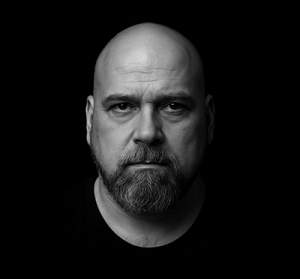
From Chessboards to Car-Shooter
Born in 1976, it all began in 1991 in the quiet town of Halle (Westphalia)—not with the roar of an engine, but with the quiet ticking of a chess clock. As a top player in his school’s chess club, Sascha grew restless during hours-long matches and sought a more creative challenge. The turning point came in 1992 when he picked up his first camera during an after-school class. He immediately discovered how shapes, light, and perspective tell stories, leading him to devour every textbook on photo and video design he could find.
Just a year later, he found his second passion: car magazines. But while the cars themselves were fascinating, the photo spreads felt amateurish and poorly staged, even to his young eyes. His blunt comment to a trade fair photographer, calling his work „trash,“ earned him some early trouble but also a core realization: good technology is useless without the skill to apply it. In 1996, he took his first steps into automotive photography with a simple compact camera. Documenting the Opel tuning scene, he shot thousands of images of everything from Corsas and Kadetts to Zafiras, quickly realizing that professional results require professional gear.
The Search for the Right Tool
The path to the perfect equipment was a years-long battle of trial and error. In 1998, a Canon SLR proved disappointing due to poor autofocus and soft images, pushing him back to Casio compacts with their distinct „snorkel“ lenses while he began perfecting his post-processing skills in Photoshop (starting in 2002). He worked his way through Sony Alpha models, the Nikon D80, D5100, and D5300, up to the rugged Pentax K30 and K3. Each brand shaped his style, but it wasn’t until the Sony A7 series that he truly found his home. Parallel to this, his focus shifted permanently: away from the wrenches and oil changes of his own Opel Manta B Exklusiv, toward professional web design and high-end visual storytelling.
Authenticity Over Flash
Since founding TuningHunter in 2013, Sascha has remained uncompromising: he works with available light or sculpts the bodywork through targeted light painting. He avoids using a flash like the devil avoids holy water. To him, artificial flashes kill the soul of a design and make every car look flat. His methods are more demanding but far more authentic. Even health setbacks and the pandemic couldn’t slow him down; he used the downtime to reach an autodidactic level of expertise in image editing and web design that far exceeds the industry standard.
Craftsmanship Over Algorithms
Today, his work for auto shows, magazines, and dealerships is so precise that people often mistake it for AI generation or cheap presets. The reality is grittier: it isn’t digital magic, it is the result of over 30 years of training and a sharpened perception. His speed isn’t based on shortcuts, but on pure routine. He captures the tuning spirit because he lives it. Whether it’s live streams or his upcoming online magazine, if you’re looking for someone who just pushes buttons, you’re in the wrong place. This is about an eye that sees the moment before the shutter even clicks.
